
Heat Therapy For Longevity: The Proven, Surprising Health Science
Last week we covered ice baths and cold-water immersion therapies. This week, we’re looking at the opposite end of the spectrum: heat therapy. The idea of an outdoor sauna overlooking fresh snow feels romantic, cozy, and luxurious. And just as I shared my biases last week, I’ll admit that I love saunas and steam rooms now that I’m on hormones and not hot flashing every five minutes. But the question is this: am I helping or harming my health? My social media feed insists heat is incredibly good for me, but what does the evidence actually say?
What is Heat Therapy? How Raising Core Body Temperature Affects Your Health
Heat therapy is the repeated use of external heat applications to elevate tissue or core body temperature for therapeutic purposes. It is delivered through various modalities including hot baths, saunas, heat wraps, hot water immersion, steam baths, and other heating applications applied either locally or to the whole body.1-3 It differs from acute heat treatment because it involves repeated, chronic application over weeks to months rather than a single-use therapy.2,3 There is supportive evidence that elevating core body temperature with heat therapy produces a variety of physiologic changes.
Vascular and metabolic effects – Increased tissue temperature promotes dilation of the blood vessels and improved circulation, which enhances delivery of oxygen and nutrients and the removal of metabolic waste products. It also activates signaling pathways involved in new blood vessel formation, mitochondrial biogenesis, and glucose metabolism through intracellular calcium.1
Molecular adaptations – Episodic heat exposure upregulates heat shock proteins (HSPs), which protect against cellular stress and inflammation. It also increases nitric oxide production, which suppresses inflammation and reduces oxidative stress.4,5
Pain modulation – Heat reduces muscle stiffness and may dampen pain perception by changing sensory nerve endings.6
Collectively, these changes likely contribute to longevity through enhanced autophagy, reduced chronic inflammation, and improved mitochondrial function.2,7,8 These adaptations overlap substantially with exercise-induced benefits, suggesting heat therapy may serve as an alternative for populations unable to exercise, but this remains theoretical as no head-to-head studies currently exist.9
Evidence-Based Health Benefits of Heat Therapy Across Medical Conditions
There is evidence that supports the use of heat in various medical conditions.
Acute low back pain – The American College of Physicians guidelines note that moderate-quality evidence shows heat wraps improve pain relief and disability compared to placebo in acute low back pain.10 Heat wrap therapy also provides superior pain relief compared to acetaminophen or ibuprofen after 1-2 days, and combining heat with exercise yields greater benefits than either intervention alone.11
Musculoskeletal disorders – A systematic review and meta-analysis found that local heat applications significantly reduce pain compared to no treatment, physical therapy, pharmacologic therapy, and placebo. Heat also improves physical function, reduces disability, increases range of motion, and decreases stiffness.6
Cardiovascular disease – Multiple mechanisms support cardiovascular benefits including improved endothelial function, reduced arterial stiffness, and lower blood pressure.4,5 Two separate meta-analyses confirmed that heat therapy reduces mean arterial pressure, systolic and diastolic blood pressure, and improves blood flow.12,13
Type 2 Diabetes – Heat therapy reduces glycated hemoglobin (HbA1c) by approximately 1% and improves fasting glucose and insulin resistance in humans. The proposed mechanism involves HSP-70 and nitric oxide production.14
Neurodegenerative disease – Observational data suggests reduced risk of dementia and Alzheimer’s disease with regular sauna bathing, but this evidence comes exclusively from a cohort of patients from a Finnish sauna study.15
Longevity and mortality – The most compelling data comes from large, prospective cohort studies of Finnish sauna bathing that identified a dose-dependent association between sauna use frequency and reduced all-cause mortality.7,15
Which Type of Heat Therapy Works Best? Comparing Saunas, Hot Water, Infrared, and Steam
Traditional Sauna
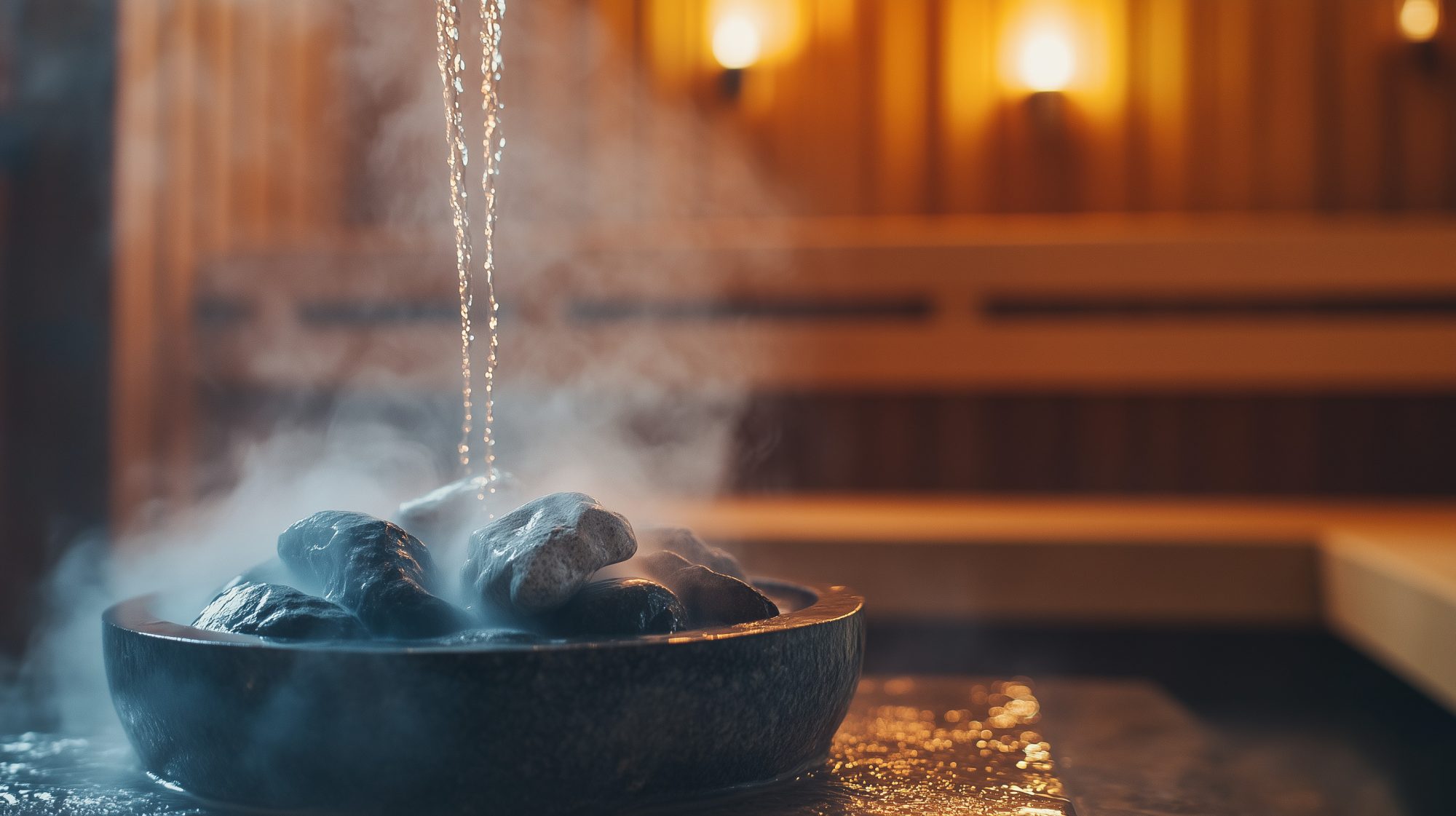
This is where things start to get a bit hazy with heat therapy. As mentioned above, there are so many different sources of heat therapy. The most robust observational and mechanistic data linking heat therapy to reduced mortality and chronic disease risk comes almost exclusively from studies of Finnish dry sauna bathing. The saunas used exposures of 5 to 20 minutes at temperatures around 174-176°F in low humidity. They also included pouring water on hot rocks to create brief bursts of steam.16-18 Study participants also produced sweat during the sessions.16
The data derived from these studies cannot be directly applied to heat therapies at lower temperature such as infrared saunas (113–149°F) or steam rooms (104–122°F), as neither of these modalities raises core body temperature to the same degree as a Finnish sauna. The data also cannot be applied to high-humidity therapies such as hot tubs and steam baths. In fact, no equivalent long-term outcome data exist for infrared sauna or steam rooms.
Infrared Sauna
While there is no evidence to support infrared sauna for longevity, it does offer some other health benefits. Far-infrared radiation enhances endothelial function and reduces arterial stiffness.19 It may also enhance insulin sensitivity, reduce inflammation,20 and improve chronic pain.21 There are a handful of other infrared sauna studies, but they are small and do not demonstrate consistent statistical significance.
Hot Water Immersion
There is evidence suggesting benefits with hot tub immersion therapy. A direct comparison study found that hot water immersion at 104.9°F for 45 minutes elevates core temperature by about 2.0°F, compared to 0.72°F with traditional Finnish sauna and essentially no elevation with infrared sauna. Cardiac output also increases most substantially with hot water immersion (+3.7 L/min) versus traditional sauna (+2.3 L/min) and infrared sauna (+1.6 L/min).22
From an inflammatory standpoint, only hot water immersion elicits measurable inflammatory and immune responses, including increased IL-6 immediately post-heating and elevated NK cells and CD8+ T cells at 24-48 hours post-exposure. These immune adaptations are absent with both sauna modalities, suggesting that the magnitude of thermal stress determines whether beneficial adaptive responses occur.22
Hot water bathing demonstrates cardiovascular benefits comparable to Finnish sauna in observational studies.23 An 8-week randomized controlled trial of hot water immersion in sedentary adults demonstrates blood pressure and blood flow improvements on par with or exceeding exercise training.4
There may also be longevity and anti-aging benefits of hot water bathing. Habitual hot spa-bathing in elderly Japanese populations is associated with preventive effects on hypertension and cardiovascular diseases, and promotive effects on collagen disease and colon cancer survival.24 However, these data lack the long-term follow-up and dose-response characterization of the Finnish sauna cohorts.
Steam Room Heat Therapy
There is a huge gap when it comes to health benefits and steam room heat therapy in clinical research. So unfortunately, I can’t share what steam exposure does because there just aren’t well-done, relevant studies.
Bottom Line
I wasn’t planning on picking a winner when it comes to temperature therapies for longevity, but I think it is pretty clear that when compared to cold therapies, heat clearly comes out ahead. Especially since there is no longevity data for cold-water immersion. However, the only heat therapy with clearly studied and demonstrated benefits is the traditional Finnish sauna. Hot water immersion, such as hot tubs, shows a lot of promise. There is no evidence to support steam rooms or infrared sauna contribute to longevity. Questions still remain on the exact time and temperature per session.
Looks like I need to save up some money for a traditional sauna or maybe a hot tub. This is going to take a while.
Disclaimer: Even though I’m a doctor, I’m not your doctor—and reading this blog does not establish a doctor–patient relationship. This information is intended for general educational purposes only and should not be taken as personalized medical advice. Always speak with your own healthcare provider before making decisions about your health.
References
- Kim K, Monroe JC, Gavin TP, Roseguini BT. Skeletal Muscle Adaptations to Heat Therapy. Journal of Applied Physiology. 2020;128(6):1635-1642. doi:10.1152/japplphysiol.00061.2020
- Brunt VE, Minson CT. Heat Therapy: Mechanistic Underpinnings and Applications to Cardiovascular Health. Journal of Applied Physiology. 2021;130(6):1684-1704. doi:10.1152/japplphysiol.00141.2020
- McGorm H, Roberts LA, Coombes JS, Peake JM. Turning Up the Heat: An Evaluation of the Evidence for Heating to Promote Exercise Recovery, Muscle Rehabilitation and Adaptation. Sports Medicine. 2018;48(6):1311-1328. doi:10.1007/s40279-018-0876-6
- Brunt VE, Howard MJ, Francisco MA, Ely BR, Minson CT. Passive Heat Therapy Improves Endothelial Function, Arterial Stiffness and Blood Pressure in Sedentary Humans. The Journal of Physiology. 2016;594(18):5329-5342. doi:10.1113/JP272453
- Brunt VE, Wiedenfeld-Needham K, Comrada LN, Minson CT. Passive Heat Therapy Protects Against Endothelial Cell Hypoxia-Reoxygenation. The Journal of Physiology. 2018;596(20):4831-4845. doi:10.1113/JP276559
- Clijsen R, Stoop R, Hohenauer E. Local Heat Applications as a Treatment of Physical and Functional Parameters in Acute and Chronic Musculoskeletal Disorders or Pain. Archives of Physical Medicine and Rehabilitation. 2022;103(3):505-522. doi:10.1016/j.apmr.2021.06.015
- Patrick RP, Johnson TL. Sauna Use as a Lifestyle Practice to Extend Healthspan. Experimental Gerontology. 2021;154:111509. doi:10.1016/j.exger.2021.111509
- McCormick JJ. Autophagy and Heat: A Potential Role for Heat Therapy. Journal of Applied Physiology. 2021;130(1):1-9. doi:10.1152/japplphysiol.00542.2020
- Cullen T. The Health Benefits of Passive Heating and Aerobic Exercise. Journal of Applied Physiology. 2020;129(6):1304-1309. doi:10.1152/japplphysiol.00608.2020
- Qaseem A, Wilt TJ, McLean RM. Noninvasive Treatments for Acute, Subacute, and Chronic Low Back Pain. Annals of Internal Medicine. 2017;166(7):514-530. doi:10.7326/M16-2367
- Kreiner DS, Matz P, Resnick DK. Evidence-Based Clinical Guidelines For Multidisciplinary Spine Care. 2020.
- Price BS, Lucas SJE, Akerman AP, Gilworth RE, Lucas RAI. Heat Thermotherapy to Improve Cardiovascular Function and Cardiometabolic Health: A Systematic Review and Meta-Analysis. Experimental Physiology. 2025;doi:10.1113/EP092404
- Pizzey FK. The Effect of Heat Therapy on Blood Pressure and Peripheral Vascular Function: A Systematic Review and Meta-Analysis. Experimental Physiology. 2021;106(6):1317-1334. doi:10.1113/EP089424
- Krause M, Ludwig MS, Heck TG, Takahashi HK. Heat Shock Proteins and Heat Therapy for Type 2 Diabetes: Pros and Cons. Current Opinion in Clinical Nutrition and Metabolic Care. 2015;18(4):374-380. doi:10.1097/MCO.0000000000000183
- Heinonen I, Laukkanen JA. Effects of Heat and Cold on Health, With Special Reference to Finnish Sauna Bathing. American Journal of Physiology Regulatory. 2018;314(5):R629-R638. doi:10.1152/ajpregu.00115.2017
- Laukkanen T. Association Between Sauna Bathing and Fatal Cardiovascular and All-Cause Mortality. JAMA Internal Medicine. 2015;175(4):542-548. doi:10.1001/jamainternmed.2014.8187
- Laukkanen JA, Zaccardi F, Khan H, Kurl S, Jae SY, Rauramaa R. Long-term Change in Cardiorespiratory Fitness and All-Cause Mortality: A Population-Based Follow-up Study. Mayo Clin Proc. Sep 2016;91(9):1183-8. doi:10.1016/j.mayocp.2016.05.014
- Laukkanen JA. Cardiovascular and Other Health Benefits of Sauna Bathing: A Review. Mayo Clinic Proceedings. 2018;93(8):1111-1121. doi:10.1016/j.mayocp.2018.04.008
- Bagabir H, Mohammad OA, Lang CC, et al. Far infrared therapy improves vascular function by enhancing endothelial function and decreasing arterial stiffness via cytoprotective pathways. Free Radic Biol Med. Dec 16 2025;241:438-446. doi:10.1016/j.freeradbiomed.2025.09.039
- Nowacka A, Śniegocki M, Smuczyński W, Ziółkowska E. Therapeutic Potential of Infrared and Related Light Therapies in Metabolic Diseases. Int J Mol Sci. May 27 2025;26(11)doi:10.3390/ijms26115134
- Beever R. Far-infrared saunas for treatment of cardiovascular risk factors: summary of published evidence. Can Fam Physician. Jul 2009;55(7):691-6.
- Atencio JK, Reed EL, Wiedenfeld Needham K, et al. Comparison of thermoregulatory, cardiovascular, and immune responses to different passive heat therapy modalities. Am J Physiol Regul Integr Comp Physiol. Jul 1 2025;329(1):R20-r35. doi:10.1152/ajpregu.00012.2025
- Kohara K, Tabara Y, Ochi M, et al. Habitual hot water bathing protects cardiovascular function in middle-aged to elderly Japanese subjects. Sci Rep. Jun 21 2018;8(1):8687. doi:10.1038/s41598-018-26908-1
- Maeda T, Mimori K, Suzuki S, Horiuchi T, Makino N. Preventive and promotive effects of habitual hot spa-bathing on the elderly in Japan. Sci Rep. Jan 9 2018;8(1):133. doi:10.1038/s41598-017-18488-3
Discover more from The Whole Human Health & Wellbeing
Subscribe now to keep reading and get access to the full archive.