
The Real Truth About Ice Baths: What You Should Know
It’s hard not to notice very fit and physically attractive celebrities while scrolling on social media. I admit that my attention was grabbed as a minimally clad Mark Wahlberg walked into some kind of contraption that allows him to take at-home ice baths. He mentioned how healthy it is and made a few confident claims that conveniently supported the product he was promoting. And while choosing attractive celebrities to sell items probably works for a lot of things, I HATE being cold. When my husband and I started dating I told him that if I am in a bad mood, it is because I’m either hungry, sleepy, or cold. Add to it, I experience Raynaud’s phenomenon every time I am cold. My fingers and toes turn blue and go numb. Hard pass on the ice bath. Not even Mark Wahlberg will convince me to buy this product, but it did make me wonder. Is there any truth to what he is saying? Does this form of masochism provide a health benefit? If so, what? Am I missing out on some remarkable longevity treatment? This week, we will discuss all things ice bath, and next week, we will turn our focus to heat. Without further ado, let’s take a closer look at what the evidence shows about ice baths.
What Are Ice Baths?
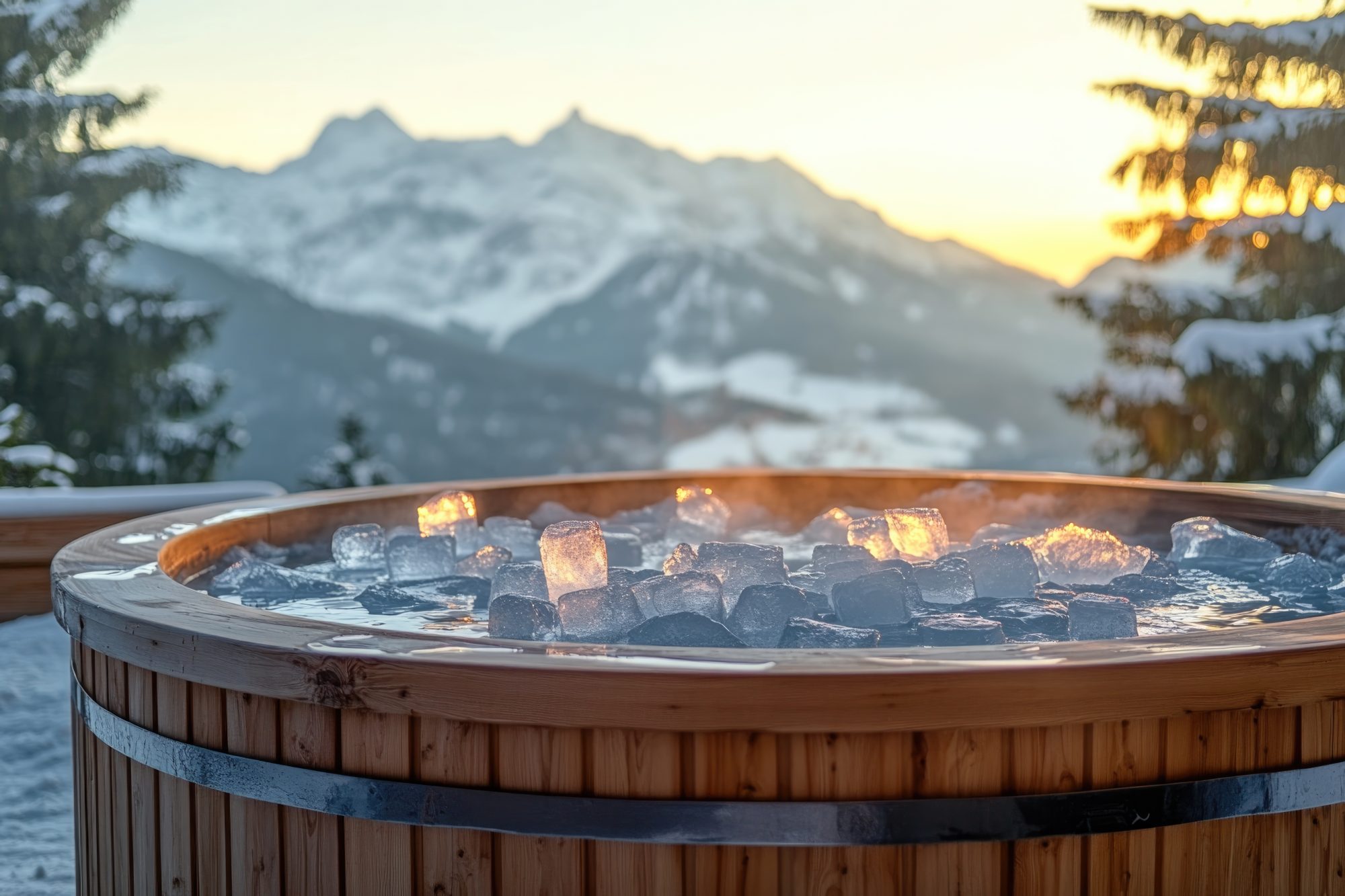
Ice baths are a form of cold water immersion (CWI) therapy, which is defined as immersing the body partially or fully in cold water with temperatures typically ranging from 10–15°C (50–59°F).1 Protocols generally use durations from 30 seconds up to 20 minutes, though the most effective and commonly studied regimens are 10–15 minutes. CWI can be performed in baths, ice baths, cold plunges, or cold showers.1,2 Cold water immersion has existed as a therapy for centuries3 but is re-emerging as a popular therapy because of perceived wellness benefits.
What Happens to Your Body During an Ice Bath
Cold exposure from ice baths leads to several physiologic changes that differ based on whether it is a first time exposure versus repeated exposure. Acute exposures trigger a cold-shock response that is characterized by gasping, hyperventilation, high blood pressure, and increased cardiac output. This peaks in the first 30 seconds and abates as the body begins to acclimate to the temperature.4 In an effort to reduce heat loss, the body releases norepinephrine and cortisol which redirect blood away from the peripheral circulation, induce shivering, and increase the heart rate.5 There is also an increase in heart rate variability6 indicating there may competing influences from both arms of the autonomic nervous system.7
With repeated exposures, the cold shock response is blunted, and the body starts to use brown adipose tissue (BAT) to generate heat without shivering.8 BAT is a specialized type of fat that generates heat through ATP-independent processes. It is most abundant in newborns, but it also persists in adults.9 Activation of BAT is of particular interest because it is associated with improved insulin sensitivity and reduced white adipose tissue (what we traditionally think of as fat).8 And while there is some BAT activation with acute cold exposure, repeated exposures increase the volume and oxidative capacity of BAT,10 which may be associated with better metabolic flexibility.11
These physiologic responses are impressive, but molecular changes don’t always translate to meaningful health outcomes. Let’s explore clinical evidence to determine real-world benefits.
Proven Benefits of Ice Baths Supported by Science
Before we get into this part, it’s important to note that most of the studies on CWI therapies are conducted on male elite athletes, so while there are benefits to the ice bath, the generalizability is questioned given the limited study population.1
Ice baths can decrease inflammation associated with acute musculoskeletal injury, arthritis, and post-exercise recovery. Reducing tissue temperature leads to decreased edema and inflammatory markers.12 Ice baths also significantly reduce post-exercise muscle soreness. Optimal results occur with water temperatures between 10-15°C sustained for 10-15 minutes.2
For athletes engaging in repeated high intensity activity, cold water immersion increases post exercise heart rate variability (HRV), reflecting enhanced parasympathetic activation.13 This is beneficial because anabolic muscle recovery occurs during parasympathetic activation which is often delayed with intense exercise.
That’s it. That is all that is proven. There’s a much larger area of maybe.
Ice Bath Claims Not Supported by Strong Evidence
Now for the gray zone. These are the areas where we know there are molecular changes, but we aren’t sure what they mean.
As previously mentioned, cold activates BAT and repeated exposures increase its volume and oxidative capacity. What we don’t know is whether this translates into meaningful improvements in insulin sensitivity and/or fat mass. A few studies using cold air or water-perfused suits have shown that cold-induced BAT activation increases whole-body glucose uptake and improves insulin sensitivity in healthy individuals and type 2 diabetes.14-18 The studies were very small. Even if you add the number of participants, it’s less than 60 people in total, so the results are questionable due to sample size. One CWI study investigated the effects of whole-body immersion in 14°C water for 10 minute sessions on 12 young, nonobese adults over a span of 16 days.19 The findings demonstrated a temporary decrease in insulin sensitivity and glucose tolerance, so the jury is still out on this one.
There’s also uncertainty around immune effects. Cold exposure spikes norepinephrine, which is involved in immune signaling, but we don’t know how that relates to immune function or clinical benefits. A systematic review, meta-analysis found no significant difference between subjects undergoing CWI and control groups when it came to immunity, sickness, and illness.1 At the time of this writing, there are no randomized controlled trials on human subjects investigating this.
Lastly, there are several claims that CWI improves mental health. The research is mixed. A 2025 systematic review and meta-analysis of randomized trials found that CWI interventions produced a significant reduction in stress 12 hours post-immersion. Improvements were also observed in sleep quality and quality of life, though no significant effects on mood were detected.1 Another study in healthy adults demonstrated temporary reduced negative affect and cortisol levels, but no changes in positive affect.20 There are also demonstrated benefits in sleep quality.21 These were all very small studies and were done mostly on healthy males leaving the results up in the air with regard to the general population.
Ice Bath Myths: What They Do Not Do
Here’s where the internet gets enthusiastic.
Ice baths do not lead to weight loss. While they do increase energy expenditure and activate BAT, no studies have demonstrated sustained reductions in weight or fat mass. A recent randomized crossover trial found that participants consumed significantly more calories after cold-water immersion compared to thermoneutral conditions, potentially offsetting any calorie deficit from increased energy expenditure.22
Ice baths do not detoxify anything. There is evidence of decreased oxidative stress and enhanced lactate clearance after exercise.23 This is not the equivalent of “detoxification.” There is no evidence in peer-reviewed, scientific literature that CWI or ice baths remove toxins from humans.24 Removing toxins from the body is a function of the liver and kidneys. There are no studies demonstrating CWI improves the activity of the liver or kidneys.
Cold immersion has not been proven to regenerate mitochondria, reverse aging, fix your hormones, increase muscle production, make you live longer, or do any of things marketers and celebrities claim it does. Improved molecular health span outcomes in animals does not equal improved clinical health span outcomes in humans.
Ice Bath Safety: Who Should Avoid Cold Water Immersion
This is the one area that causes me the greatest concern. Cold exposure isn’t benign. It’s one thing when wellness trends have no scientific foundation and also cause no harm. For some people, CWI is genuinely unsafe and even deadly. Remember the cold shock response discussed above. There are several reported cases of cardiac arrest due to it.25
Individuals with pre-existing cardiac conditions such as coronary artery disease, arrhythmias, and structural heart disease, in addition to those with uncontrolled hypertension, are at high risk for cardiac arrest with CWI. There are also reports of people without these risk factors experiencing cardiac arrest with CWI.4,7,25
Those with Raynaud’s phenomenon (like me), peripheral vascular disease, or cold urticaria should also avoid ice baths. While it is not necessarily deadly in this population, there is a higher risk of pain, numbness, and tissue injury. Pregnant women, people with neuropathy, and those with conditions that impair temperature regulation should be cautious or avoid cold immersion altogether.
And for the average person? Staying in cold water too long or pushing the temperature too low can lead to hypothermia or even loss of consciousness. The internet doesn’t like to talk about that part.
Alternatives to Ice Baths for People Who Hate the Cold
If the idea of willingly sinking into freezing water feels like punishment, the good news is that most of the benefits associated with ice baths can be achieved in other ways. Active recovery, massage, adequate protein intake, and good sleep all have strong evidence and significantly more comfort in treating muscle soreness. If you’re chasing the norepinephrine “boost,” a brisk walk in cold weather, a cool rinse at the end of your shower, or simply stepping outside on a chilly morning can trigger a milder version without full-body immersion.
Contrast therapy (alternating warm and cool water) is another option that provides circulatory benefits without the discomfort of an ice bath. And if you’re hoping for metabolic enhancement, nothing beats the basics: building muscle, improving aerobic fitness, and maintaining metabolic flexibility through movement and nutrition. No tub of ice required.
Are Ice Baths Worth It? The Real Takeaway
Ice baths aren’t magic, but they aren’t nonsense either. They are a therapeutic modality with some well-supported benefits identified in elite athletes. There’s a chance those benefits extend to a broader population.
For most people, ice baths are a choice. They are not necessary for healthy living. They’re a tool you can use if you enjoy them and tolerate them well, but they are far from essential for long-term health or longevity. In fact, they can do the exact opposite and cause quite a bit of harm. And if you hate the cold as much as I do, rest assured. You are not missing the secret to a longer, healthier life.
Next week, we’ll tackle the other end of the temperature spectrum, heat exposure, and explore what the evidence says about saunas.
Disclaimer: Even though I’m a doctor, I’m not your doctor—and reading this blog does not establish a doctor–patient relationship. This information is intended for general educational purposes only and should not be taken as personalized medical advice. Always speak with your own healthcare provider before making decisions about your health.
References
- Cain T, Brinsley J, Bennett H, Nelson M, Maher C, Singh B. Effects of cold-water immersion on health and wellbeing: A systematic review and meta-analysis. PLoS One. 2025;20(1):e0317615. doi:10.1371/journal.pone.0317615
- Machado AF, Ferreira PH, Micheletti JK, et al. Can Water Temperature and Immersion Time Influence the Effect of Cold Water Immersion on Muscle Soreness? A Systematic Review and Meta-Analysis. Sports Med. Apr 2016;46(4):503-14. doi:10.1007/s40279-015-0431-7
- Allan R, Malone J, Alexander J, et al. Cold for centuries: a brief history of cryotherapies to improve health, injury and post-exercise recovery. Eur J Appl Physiol. May 2022;122(5):1153-1162. doi:10.1007/s00421-022-04915-5
- Castellani JW, Eglin CM, Ikäheimo TM, et al. ACSM Expert Consensus Statement: Injury Prevention and Exercise Performance During Cold-Weather Exercise. Current Sports Medicine Reports. 2021;20(11):594-607. doi:10.1249/JSR.0000000000000907
- Castellani JW, Young AJ, Ducharme MB, et al. American College of Sports Medicine Position Stand: Prevention of Cold Injuries During Exercise. Medicine and Science in Sports and Exercise. 2006;38(11):2012-2029. doi:10.1249/01.mss.0000241641.75101.64
- Jdidi H, Dugué B, de Bisschop C, Dupuy O, Douzi W. The Effects of Cold Exposure (Cold Water Immersion, Whole- And Partial- Body Cryostimulation) on Cardiovascular and Cardiac Autonomic Control Responses in Healthy Individuals: A Systematic Review, Meta-Analysis and Meta-Regression. Journal of Thermal Biology. 2024;121:103857. doi:10.1016/j.jtherbio.2024.103857
- Shattock MJ, Tipton MJ. ‘Autonomic conflict’: a different way to die during cold water immersion? J Physiol. Jul 15 2012;590(14):3219-30. doi:10.1113/jphysiol.2012.229864
- Sidossis L, Kajimura S. Brown and beige fat in humans: thermogenic adipocytes that control energy and glucose homeostasis. J Clin Invest. Feb 2015;125(2):478-86. doi:10.1172/jci78362
- Santhanam P, Rowe SP, Solnes LB, Quainoo B, Ahima RS. A systematic review of imaging studies of human brown adipose tissue. Ann N Y Acad Sci. Jul 2021;1495(1):5-23. doi:10.1111/nyas.14579
- van der Lans AA, Hoeks J, Brans B, et al. Cold acclimation recruits human brown fat and increases nonshivering thermogenesis. J Clin Invest. Aug 2013;123(8):3395-403. doi:10.1172/jci68993
- Castellani JW, Young AJ. Human Physiological Responses to Cold Exposure: Acute Responses and Acclimatization to Prolonged Exposure. Autonomic Neuroscience: Basic & Clinical. 2016;196:63-74. doi:10.1016/j.autneu.2016.02.009
- Eimonte M, Paulauskas H, Daniuseviciute L, et al. Residual Effects of Short-Term Whole-Body Cold-Water Immersion on the Cytokine Profile, White Blood Cell Count, and Blood Markers of Stress. International Journal of Hyperthermia. 2021;38(1):696-707. doi:10.1080/02656736.2021.1915504
- Bastos FN, Vanderlei LC, Nakamura FY, et al. Effects of cold water immersion and active recovery on post-exercise heart rate variability. Int J Sports Med. Nov 2012;33(11):873-9. doi:10.1055/s-0032-1301905
- Iwen KA, Backhaus J, Cassens M, et al. Cold-Induced Brown Adipose Tissue Activity Alters Plasma Fatty Acids and Improves Glucose Metabolism in Men. The Journal of Clinical Endocrinology and Metabolism. 2017;102(11):4226-4234. doi:10.1210/jc.2017-01250
- Hanssen MJ, Hoeks J, Brans B, et al. Short-Term Cold Acclimation Improves Insulin Sensitivity in Patients With Type 2 Diabetes Mellitus. Nature Medicine. 2015;21(8):863-865. doi:10.1038/nm.3891
- Hanssen MJ, van der Lans AA, Brans B, et al. Short-Term Cold Acclimation Recruits Brown Adipose Tissue in Obese Humans. Diabetes. 2016;65(5):1179-1189. doi:10.2337/db15-1372
- Lee P, Smith S, Linderman J, et al. Temperature-Acclimated Brown Adipose Tissue Modulates Insulin Sensitivity in Humans. Diabetes. 2014;63(11):3686-3698. doi:10.2337/db14-0513
- Chondronikola M, Volpi E, Børsheim E, et al. Brown Adipose Tissue Improves Whole-Body Glucose Homeostasis and Insulin Sensitivity in Humans. Diabetes. 2014;63(12):4089-4099. doi:10.2337/db14-0746
- Solianik R, Jarutiene L, Brazaitis M. Daily brief whole-body immersion in 14 °C water temporarily decreases glucose tolerance and insulin sensitivity. J Therm Biol. Apr 2025;129:104088. doi:10.1016/j.jtherbio.2025.104088
- Reed EL, Chapman CL, Whittman EK, et al. Cardiovascular and Mood Responses to an Acute Bout of Cold Water Immersion. Journal of Thermal Biology. 2023;118:103727. doi:10.1016/j.jtherbio.2023.103727
- Knill-Jones J, Shadwell G, Hurst HT, Mawhinney C, Sinclair JK, Allan R. Influence of acute and chronic therapeutic cooling on cognitive performance and well-being. Physiol Behav. Feb 1 2025;289:114728. doi:10.1016/j.physbeh.2024.114728
- Grigg MJ, Thake CD, Allgrove JE, Broom DR. Effects of cold-water immersion on energy expenditure, ad-libitum energy intake and appetite in healthy adults. Physiol Behav. Jul 1 2025;296:114914. doi:10.1016/j.physbeh.2025.114914
- Bleakley CM, Davison GW. What is the biochemical and physiological rationale for using cold-water immersion in sports recovery? A systematic review. Br J Sports Med. Feb 2010;44(3):179-87. doi:10.1136/bjsm.2009.065565
- Tipton MJ, Collier N, Massey H, Corbett J, Harper M. Cold water immersion: kill or cure? Exp Physiol. Nov 1 2017;102(11):1335-1355. doi:10.1113/ep086283
- Knechtle B, Waśkiewicz Z, Sousa CV, Hill L, Nikolaidis PT. Cold Water Swimming-Benefits and Risks: A Narrative Review. Int J Environ Res Public Health. Dec 2 2020;17(23)doi:10.3390/ijerph17238984
One comment on “The Real Truth About Ice Baths: What You Should Know”
Pingback: