
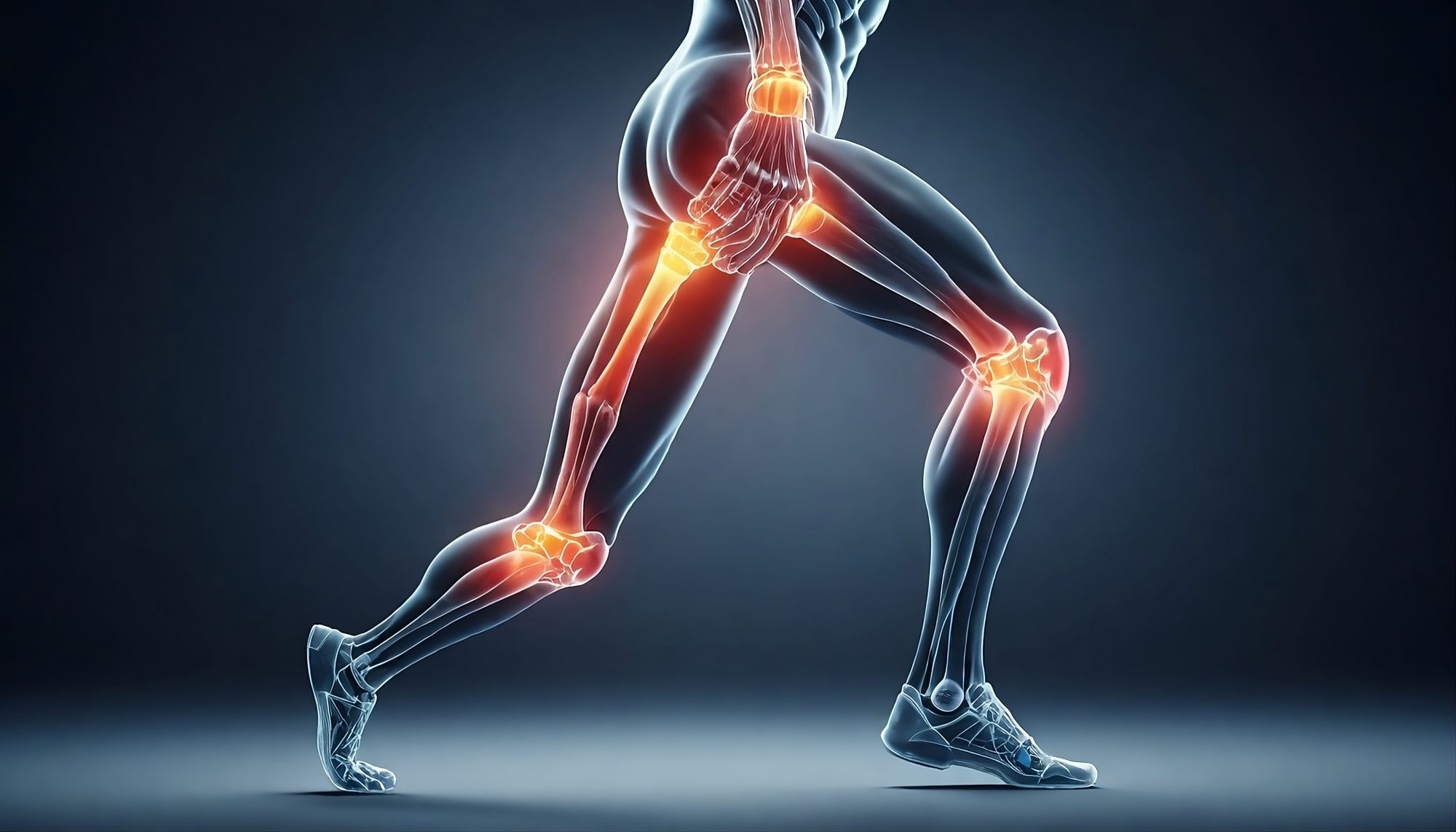
PRP for Joint Health?
Running around on the rugby pitch during my 20’s and 30’s now translates into painful joints in my 40’s. I’ve never been a fan of cortisone shots because, in most cases, they don’t fix the underlying issue. They just temporize symptoms. The definitive solution for many has been joint replacement. But what if your joints aren’t quite bad enough for replacement? Do you live in pain? Do you take oral medications every day? That’s not something I’m interested in.
Thankfully, there are several new treatments for joint pain. The one I am going to explore today is something called PRP: platelet-rich plasma. What is it? Does it actually work or is it another fake wellness scheme? What does the evidence say?
What is PRP?
PRP stands for platelet-rich plasma. It’s made by drawing some of your own blood and using a centrifuge to concentrate the platelets—cells in your blood that play a key role in healing and tissue repair. That concentrated solution is then injected directly into the affected joint, tendon, or ligament. It’s not stem cells. It’s not a supplement. It’s your own biology, repurposed to support repair where your body needs it most.
How Does PRP Work?
Whenever we sustain an injury, one of the first cells to respond is the platelet. They wave a big red flag to alert the body to send in the healing cavalry. When concentrated platelets are intentionally injected to a targeted area, as is the case with PRP, they release several growth factors (platelet-derived growth factor transforming growth factor beta and vascular endothelial growth factor) which help stimulate cell growth, blood vessel formation, and tissue repair.1,2 PRP also improves the joint environment by enhancing the balance between pro- and anti-inflammatory molecules.3
In short, PRP controls inflammation while supporting the body’s natural repair systems. It doesn’t regrow cartilage from scratch, but it may slow progression and reduce symptoms—especially in early to moderate stages of osteoarthritis.4
What Does the Evidence Say?
The American Society of Pain and Neuroscience recommends PRP for knee osteoarthritis based on safety and effectiveness data, particularly when delivered as a series of injections.5 The European Society of Sports Traumatology, Knee Surgery and Arthroscopy (ESSKA) also recommends PRP as a first-line injectable treatment for mild to moderate knee OA (Kellgren-Lawrence grades 1–3).4
In comparative studies, PRP has in some cases shown superior results to corticosteroids and hyaluronic acid injections for pain relief and function.6 It’s also being used for tendon conditions like lateral epicondylitis (tennis elbow) and rotator cuff injuries, with evidence of significant improvements in pain and grip strength, and in many cases, a reduced need for surgery.7,8
BUT — and this is a big but — not all PRP is the same. For it to be effective, a minimum of 10 billion platelets is recommended.9 This is best achieved by a high-quality PRP preparation that has gone through a double-spin centrifuge.10,11 If the concentration is too low—or if red and white blood cells are not properly filtered—it may not have the intended effect.
The molecular basis of its effectiveness continues to be studied, but the clinical results have already led to its inclusion in mainstream orthopedic and sports medicine guidelines.
Is It Safe?
For most people, yes. Because PRP is made from your own blood, the risk of allergic reaction or rejection is minimal. The most common side effects are localized pain or swelling at the injection site. It’s not appropriate for everyone—those with active infections, certain cancers, poorly controlled diabetes, or blood disorders should avoid it. 12
So, What’s the Final Word on PRP?
PRP isn’t a miracle, but, in my opinion, it’s a go. It’s a regenerative option backed by published data, supported by clinical guidelines, and grounded in the body’s own biology. It won’t reverse joint damage overnight, but in the right setting, it can help manage pain, improve function, and potentially delay more invasive interventions. If you’re curious whether PRP might be a fit for your joint issue, it’s worth having a conversation with a physician who offers it—and who understands the evidence behind it. And always make sure your physician uses a double-spin centrifuge to prepare the PRP.
References
- Rodríguez-Merchán EC. Intra-Articular Platelet-Rich Plasma Injections in Knee Osteoarthritis: A Review of Their Current Molecular Mechanisms of Action and Their Degree of Efficacy. International Journal of Molecular Sciences. 2022;23(3):1301. doi:10.3390/ijms23031301
- Riewruja K, Phakham S, Sompolpong P, et al. Cytokine profiling and intra-articular injection of autologous platelet-rich plasma in knee osteoarthritis. International journal of molecular sciences. 2022;23(2):890.
- Szwedowski D, Szczepanek J, Paczesny Ł, et al. The Effect of Platelet-Rich Plasma on the Intra-Articular Microenvironment in Knee Osteoarthritis. International Journal of Molecular Sciences. 2021;22(11):5492. doi:10.3390/ijms22115492
- Laver L, Filardo G, Sanchez M, et al. The Use of Injectable Orthobiologics for Knee Osteoarthritis: A European ESSKA-ORBIT Consensus. Part 1–Blood-Derived Products (Platelet-Rich Plasma). Knee Surgery, Sports Traumatology, Arthroscopy. 2024;32(4):783-797. doi:10.1002/ksa.12077
- Hunter CW, Deer TR, Jones MR, et al. Consensus Guidelines on Interventional Therapies for Knee Pain (STEP Guidelines) From the American Society of Pain and Neuroscience. Journal of Pain Research. 2022;15:2683-2745. doi:10.2147/JPR.S370469
- Sheean AJ, Anz AW, Bradley JP. Platelet-Rich Plasma: Fundamentals and Clinical Applications. Arthroscopy: The Journal of Arthroscopic & Related Surgery. 2021;37(9):2732-2734. doi:10.1016/j.arthro.2021.07.003
- Karjalainen TV, Silagy M, O’Bryan E, et al. Autologous Blood and Platelet-Rich Plasma Injection Therapy for Lateral Elbow Pain. The Cochrane Database of Systematic Reviews. 2021;9:CD010951. doi:10.1002/14651858.CD010951.pub2
- Kim C-H, Park Y-B, Lee J-S, Jung H-S. Platelet-Rich Plasma Injection vs. Operative Treatment for Lateral Elbow Tendinosis: A Systematic Review and Meta-Analysis. Journal of Shoulder and Elbow Surgery. 2022;31(2):428-436. doi:10.1016/j.jse.2021.09.008
- Bansal H, Leon J, Pont JL, et al. Platelet-rich plasma (PRP) in osteoarthritis (OA) knee: Correct dose critical for long term clinical efficacy. Scientific reports. 2021;11(1):3971.
- Hunter CW, Deer TR, Jones MR, et al. Consensus guidelines on interventional therapies for knee pain (STEP Guidelines) from the American Society of Pain and Neuroscience. Journal of pain research. 2022:2683-2745.
- Chen Z, Deng Z, Ma Y, et al. Preparation, procedures and evaluation of platelet-rich plasma injection in the treatment of knee osteoarthritis. Journal of Visualized Experiments (JoVE). 2019;(143):e57700.
- Eymard F, Louati K, Noel E, et al. Indications and Contraindications to Platelet-Rich Plasma Injections in Musculoskeletal Diseases in Case of Infectious, Oncological and Haematological Comorbidities: A 2025 Formal Consensus From the GRIIP (International Research Group on Platelet Injections). Knee Surgery, Sports Traumatology, Arthroscopy. 2025;doi:10.1002/ksa.12682