
Visceral Fat: Why You Can Have a Normal BMI and High Body Fat
Did you know it is possible to have a normal weight or body mass index (BMI) while simultaneously having high levels of fat? If you didn’t know that don’t worry. You are not alone. It’s called visceral fat, and most people have not heard of it.
Most of us think of fat when a pair of pants no longer fit or when we put on a swimsuit, but that is only one kind of fat our body holds. Visceral fat is a fat we cannot see, elevated levels are associated with poor health outcomes, and everyone has some amount of it in their body. It is a metabolically active tissue that interacts with our hormones and inflammatory markers, and it is one of the most modifiable risk factors in medicine.
So in today’s post, we are going to discuss visceral fat: what is it, what healthy thresholds look like, what disease risks are associated with it, and how to reduce levels if we are above those thresholds.
What is Visceral Fat? (Visceral vs. Subcutaneous Fat)
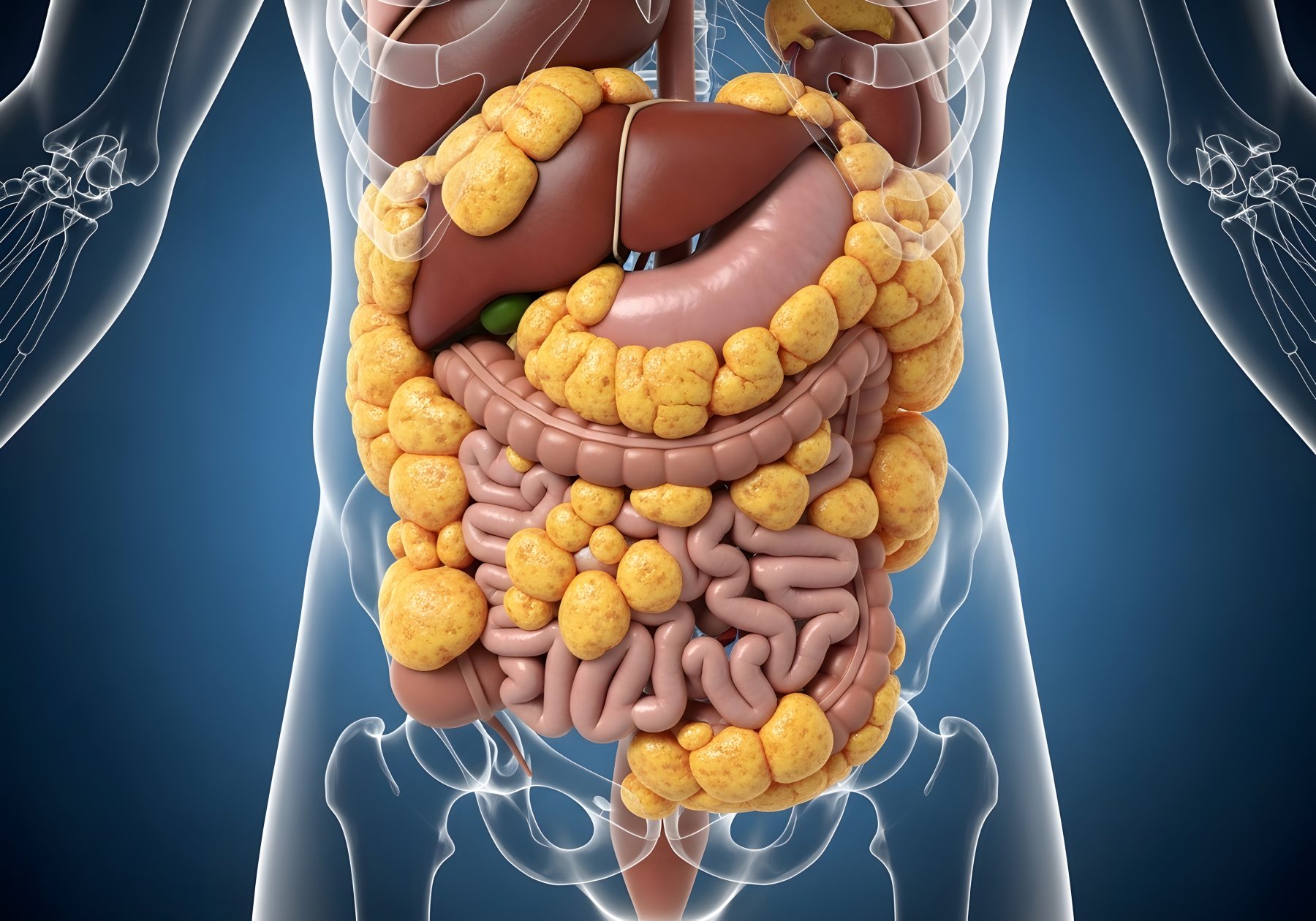
Visceral adipose tissue (VAT) is fat stored within the abdominal cavity, surrounding or infiltrating internal organs. VAT is distinct from subcutaneous adipose tissue (SAT), which is fat stored beneath the skin. SAT is the type of fat most people see and understand. It is the primary storage site during caloric excess and provides mechanical protection and insulation. Once the storage capacity of SAT is exceeded, or its ability to produce new adipocytes (fat cells) is impaired, VAT becomes the new storage site for caloric excess.1
While visceral fat does provide some degree of cushion to the organs, it is very distinct from SAT because VAT is a hormonally and metabolically active tissue. It secretes hormones, fatty acids, and inflammatory cytokines that have a significant impact on organ function and metabolism.2,3
There is also a difference between the types of adipocytes that make up VAT and SAT. SAT adipocytes are smaller and more insulin sensitive, whereas VAT adipocytes are larger and more insulin resistant. Both VAT and SAT adipocytes have variable responsiveness to cortisol, testosterone, estrogen, and catecholamines, which influence whether the fat cells are broken down for energy or accumulated for storage.1
What Causes Visceral Fat Accumulation?
While many attribute VAT accumulation to a caloric surplus, the process is much more complex and is associated with several different risk factors.
Lifestyle Factors: Diet, Exercise, Sleep
One of the biggest drivers of VAT accumulation is related to lifestyle factors. Increased sedentary time is associated with higher visceral fat accumulation.4 Diet also plays a crucial role. Caloric surplus directly contributes to VAT accumulation.3-5 There is also evidence that poor sleep contributes to VAT accumulation.6-8
Age and Sex
Visceral fat increases by over 200% in men and nearly 400% in women from their 30s into their 70s.4 Men accumulate VAT earlier, with the most rapid increase in younger adulthood,9 and have a significantly higher VAT mass than women at every comparable BMI.10 Women have an inflection point around age 47 that aligns with the menopausal transition, where VAT accumulation sharply accelerates.9 Visceral fat continues to increase at a rate of approximately 6% per year thereafter.11
Hormones
Hormones heavily influence the accumulation of visceral fat, but the relationship is complicated because it is an integrated process. Some interactions amplify or counteract each other depending on other clinical factors and inflammatory cytokines. Excessive cortisol, as with Cushing’s syndrome, drives visceral fat accumulation. Visceral fat can also produce cortisol to perpetuate its own growth. There is some debate regarding the effects of functional hypercortisolism with chronic stress.12 Leptin, which is often secreted after meals, decreases the production of VAT, but leptin resistance can lead to its accumulation.4 Bioavailable testosterone is associated with lower visceral fat in men but increased visceral fat in women.13 Estrogen promotes subcutaneous fat storage and inhibits VAT accumulation. As estrogen levels decline, a shift occurs that promotes VAT accumulation instead.1
Microbiome
There may be a link between the gut microbiome and VAT accumulation. A causal relationship has not been established, but observational studies suggest that decreased microbiome diversity may contribute to increased VAT accumulation.4,14
Genetics and Ethnicity
Genetic predisposition and ethnicity influence fat distribution. It is well established that Asian populations accumulate more VAT at lower BMI levels.3 Conversely, Black and African-descent populations have a higher metabolic risk despite lower VAT levels.15 This variability is one of the reasons BMI alone is insufficient for assessing metabolic risk.3,16,17
How to Measure Visceral Fat Accurately
There are various methods available for measuring VAT levels. The modality of choice depends on cost, feasibility, and the ability to trend measurements over time.
The gold standard measurements are MRI and CT scan. Both methods provide accurate VAT measurements and are capable of identifying ectopic fat deposition. While VAT mass is associated with health outcomes, the exact location of ectopic fat deposition, such as in the liver, kidney, pancreas, skeletal muscle or around the heart, provides even more insight into disease risks. MRI and CT are the only modalities capable of providing this specific information.3 The downsides are cost, radiation exposure of CT imaging, and limited availability for repeated measurements needed for trending.
A DEXA (dual energy x-ray absorptiometry) scan is a validated method of providing relatively accurate VAT values. While it cannot provide information regarding ectopic fat deposition, DEXA measurements demonstrate excellent correlation with MRI measurements in most individuals.18
Machines using bioelectrical impedance analysis (BIA) utilize low electrical currents to measure the impedance of that current throughout the body. The machines then estimate VAT volume using regression equations. When compared to DEXA, BIA performs well when differentiating skeletal muscle mass from body fat mass. However, it has a poor correlation specifically for VAT when compared to MRI and DEXA because it does not differentiate between VAT and SAT well and relies on regression equations to provide estimate values.18 BIA machines are accurate when it comes to repeat measurements over time, however. So while their absolute VAT value is not precise, trending measurements provide accurate data on additional VAT accumulation or loss over time.
Waist circumference is inexpensive, easily repeatable, and the most widely used surrogate for VAT volume. It measures total abdominal girth and therefore cannot distinguish between visceral fat, subcutaneous fat, abdominal wall musculature, and organs. However, there are established cutoffs for circumference measurements associated with VAT levels and ectopic fat.19
Consumer-grade home scales, which utilize fewer frequencies, fewer electrode contact points, and less sophisticated algorithms, do not provide accurate data on VAT levels.
Visceral Fat Health Risks and Ectopic Fat Adiposity
Visceral fat is a concern because elevated levels are linked with poor health outcomes. Visceral obesity is associated with atherogenic lipid abnormalities, high triglycerides, and chronic low-grade inflammation.19 There are also cancer risks. For each 100cm2 increase in VAT, there is a 32% higher relative risk of obesity-related cancers in postmenopausal women.20 A Mendelian randomization analysis demonstrated an increased risk of pancreatic and squamous-cell lung cancer with lifelong exposure to elevated VAT volumes.21
There is also the concern of ectopic adipose deposition. As discussed, VAT accumulates when SAT storage capabilities are overwhelmed. VAT storage also has limits, and when free fatty acid levels overwhelm VAT storage capabilities, those fats, called ectopic adipose tissue, deposit in other parts of the body.
Fat around the heart is an independent predictor of cardiovascular death, heart failure hospitalizations, and major adverse cardiac events. When deposited around the kidney, it reduces kidney function and leads to chronic kidney disease. Liver fat is the strongest predictor of insulin resistance, impaired glucose regulation, and metabolic syndrome. Pancreatic fat deposition demonstrates similar effects to those seen in the liver.4 Fatty deposition into organs can also lead to organ failure. Nonalcoholic steatohepatitis (NASH) is now one of the fastest-growing causes of cirrhosis.22
It is important to note that VAT predicts health outcome risk better than BMI alone, reinforcing the importance of measuring and tracking VAT volumes.
What Is a Healthy Visceral Fat Level? Optimal Thresholds
There is no single universal optimum threshold for VAT volume, but 100cm2 is a widely cited benchmark. A large NHANES analysis identified optimal thresholds of 103 cm2 for metabolic syndrome, 119 cm2 for type 2 diabetes, and 84 cm2 for insulin resistance.23 However, these values are not entirely reliable because there is a great deal of variability depending on age, sex, and ethnicity. When these factors are considered, thresholds can range from 70 to 166 cm2.24
While waist circumference does not provide a VAT measurement, there are established thresholds of increased metabolic risk. For non-Asian individuals, a waist circumference of 35 inches (88 cm) or greater for women and 40 inches (102 cm) or greater for men indicates increased risk. These thresholds decrease to 80 cm for women and 90 cm for men in Asian populations.25
How to Reduce Visceral Fat: Evidence-Based Exercise and Diet
Visceral fat reduction can be achieved through lifestyle modifications, medical interventions, or a combination of both.
Exercise Dosages for Visceral Fat Loss
The most effective lifestyle modification is vigorous aerobic exercise and high-intensity interval training (HIIT). Resistance training alone is the least effective.26 As little as 400 MET minutes per week of HIIT or approximately 1,100 MET minutes per week of aerobic exercise has demonstrated VAT reduction.27 An effective “dose” of exercise was identified as three sessions per week for 12 to 16 weeks.27
Dietary Strategies and Intermittent Fasting
Dietary changes can also reduce VAT, but no single diet has been identified as superior. The strongest evidence supports an energy-reduced Mediterranean diet combined with physical activity for VAT reduction.28 Research comparing low-carbohydrate and low-fat diets has produced mixed results. Some randomized trials show greater VAT loss with healthy low-carbohydrate diets,29 while others find no meaningful differences when caloric intake and weight loss are similar.30,31 A recent meta-analysis identified intermittent fasting and very low-carbohydrate diets as effective dietary strategies for reducing visceral fat, but it is important to note the differences between the diets were minimal.32
Intermittent fasting and time-restricted eating can also reduce visceral fat, but current evidence indicates they are generally no more effective than traditional calorie restriction when overall weight loss is equivalent.33-36 Sustained caloric restriction alone consistently reduces VAT, reinforcing that maintaining a long-term energy deficit remains one of the primary drivers of visceral fat loss.37
Dietary choices may also influence VAT accumulation. Sugar-sweetened beverages, particularly those high in fructose, consistently promote VAT and liver fat accumulation.38-40 Conversely, diets rich in polyphenols and dietary fiber, especially from fruits, vegetables, beans, nuts and other plant-based foods, are associated with lower VAT.41-44 More research is needed to determine the magnitude of these as independent factors.
While dietary interventions can reduce VAT, exercise appears to provide unique benefits for reducing visceral fat beyond calorie restriction alone, with evidence supporting a dose-response relationship that has not been observed with diet alone.45
Other Lifestyle Factors
Sleep optimization has demonstrated effects on VAT distribution. The strongest evidence suggests that increasing sleep from fewer than 6 hours per night to approximately 7 to 8 hours per night is associated with less visceral fat accumulation.6 This is better considered as a preventative strategy that avoids VAT accumulation rather than one that reduces already established levels. The evidence on stress reduction as a means of reducing visceral fat is weak.
Medical Interventions
Successful medical interventions include GLP-1 therapy and bariatric surgery. Retatrutide, a GLP-1, GIP, and glucagon receptor agonist, has shown remarkable efficacy in VAT reduction in patients with metabolic dysfunction-associated fatty liver disease.4 Hormone replacement therapy can address estrogen decline in peri- and postmenopausal women. Testosterone therapy is also a possible solution in men who are candidates for therapy. There are several other medications currently under investigation to directly treat VAT.
Key Takeaways
There are some very important take-home points from this post. First of all, it is important for everyone to know that VAT is an entirely different beast from SAT. While I completely understand some people may not like extra inches they can pinch, those pinches are benign compared to what VAT does on a metabolic and hormonal level.
Next, a normal BMI does not imply a normal amount of VAT. This is a perfect example of what I mean when I say skinny does not equal healthy. I am a strong believer in measuring VAT levels in all of my patients. While formal radiology studies such as CT, MRI, and DEXA are the most accurate, people should use whatever they have access to so that they can follow the trend rather than the absolute value.
The best approach to VAT is maintaining lifestyle habits that prevent accumulation. If that ship has sailed, it is not too late to make lifestyle modifications to reduce levels. I have a lot of patients asking about cortisol levels, stress reduction, and supplement use with regard to their fat distribution or weight gain. I discussed above that cortisol and stress may have some influence on VAT, but that influence is nowhere near as significant as exercise, diet, and sleep. These should be optimized first. If they have been optimized and VAT accumulation remains a concern due to demographic or genetic reasons, the medications are an excellent next step.
Reducing VAT is one of the most modifiable risk factors for disease. Everyone should know their VAT level and make the changes needed to reduce their risk as much as possible.
Disclaimer: Even though I’m a doctor, I’m not your doctor. The information in this article is for general educational purposes only and should not be considered personal medical advice. Every person is different, and recommendations should always be individualized based on your medical history, medications, and health goals. Please discuss any questions or changes to your care with your own healthcare professional.
Frequently Asked Questions About Visceral Fat
You cannot determine the amount precisely by appearance or touch alone. Subcutaneous fat lies directly beneath the skin and can often be pinched, while visceral fat surrounds the abdominal organs; waist circumference can estimate risk, but imaging methods such as MRI, CT, or DEXA provide a more accurate assessment.
Consistent aerobic exercise is one of the most effective habits for reducing visceral fat, particularly when performed at a moderate-to-vigorous intensity. High-intensity interval training can also be effective when it is medically appropriate for the individual.
The timeframe varies based on your starting point, exercise intensity, nutrition, sleep, hormones, and medical conditions. Research has demonstrated measurable reductions after approximately 12 to 16 weeks of consistent exercise performed about three times per week.
References
- Ibrahim MM. Subcutaneous and visceral adipose tissue: structural and functional differences. Obes Rev. Jan 2010;11(1):11-8. doi:10.1111/j.1467-789X.2009.00623.x
- Lee MJ, Kim J. The pathophysiology of visceral adipose tissues in cardiometabolic diseases. Biochem Pharmacol. Apr 2024;222:116116. doi:10.1016/j.bcp.2024.116116
- Neeland IJ, Ross R, Després JP, et al. Visceral and ectopic fat, atherosclerosis, and cardiometabolic disease: a position statement. Lancet Diabetes Endocrinol. Sep 2019;7(9):715-725. doi:10.1016/s2213-8587(19)30084-1
- Guldan M, Ozbek L, Abdel-Rahman SM, et al. Targeting visceral and ectopic adiposity: Pharmacological and surgical interventions beyond global weight loss. Diabetes, Obesity and Metabolism. 2025;27(11):6116-6138. doi:https://doi.org/10.1111/dom.70019
- Khalafi M, Fatolahi S, Symonds ME. Comparative Efficacy of Exercise Type on Visceral Adipose Tissue in Patients With Prediabetes and Type 2 Diabetes Mellitus: A Systematic Review With Pairwise and Network Meta-Analyses. Review. Obesity Reviews. 2025;
- Yu Y, Chen Y, Zhang H, et al. Sleep Duration and Visceral Adipose Tissue: Linear and Nonlinear Mendelian Randomization Analyses. J Clin Endocrinol Metab. Nov 23 2022;107(11):2992-2999. doi:10.1210/clinem/dgac551
- Covassin N, Singh P, McCrady-Spitzer SK, et al. Effects of Experimental Sleep Restriction on Energy Intake, Energy Expenditure, and Visceral Obesity. J Am Coll Cardiol. Apr 5 2022;79(13):1254-1265. doi:10.1016/j.jacc.2022.01.038
- Giannos P, Prokopidis K, Candow DG, et al. Shorter sleep duration is associated with greater visceral fat mass in US adults: Findings from NHANES, 2011-2014. Sleep Med. May 2023;105:78-84. doi:10.1016/j.sleep.2023.03.013
- Zsido RG, Heinrich M, Slavich GM, et al. Association of Estradiol and Visceral Fat With Structural Brain Networks and Memory Performance in Adults. JAMA Network Open. 2019;2(6):e196126-e196126. doi:10.1001/jamanetworkopen.2019.6126
- Baarts RB, Jensen MR, Hansen OM, et al. Age- and sex-specific changes in visceral fat mass throughout the life-span. Obesity (Silver Spring). Jul 2023;31(7):1953-1961. doi:10.1002/oby.23779
- Greendale GA, Han W, Finkelstein JS, et al. Changes in Regional Fat Distribution and Anthropometric Measures Across the Menopause Transition. J Clin Endocrinol Metab. Aug 18 2021;106(9):2520-2534. doi:10.1210/clinem/dgab389
- Kyrou I, Chrousos GP, Tsigos C. Stress, visceral obesity, and metabolic complications. Ann N Y Acad Sci. Nov 2006;1083:77-110. doi:10.1196/annals.1367.008
- Mongraw-Chaffin ML, Anderson CA, Allison MA, et al. Association between sex hormones and adiposity: qualitative differences in women and men in the multi-ethnic study of atherosclerosis. J Clin Endocrinol Metab. Apr 2015;100(4):E596-600. doi:10.1210/jc.2014-2934
- M UD, Ahmed BA, Syed SA, et al. Characteristics of Abdominal Visceral Adipose Tissue, Metabolic Health and the Gut Microbiome in Adults. J Clin Endocrinol Metab. Feb 20 2024;109(3):680-690. doi:10.1210/clinem/dgad604
- Lim U, Monroe KR, Buchthal S, et al. Propensity for Intra-abdominal and Hepatic Adiposity Varies Among Ethnic Groups. Gastroenterology. Mar 2019;156(4):966-975.e10. doi:10.1053/j.gastro.2018.11.021
- Rubino F, Cummings DE, Eckel RH, et al. Definition and diagnostic criteria of clinical obesity. Lancet Diabetes Endocrinol. Mar 2025;13(3):221-262. doi:10.1016/s2213-8587(24)00316-4
- Zahid S, Peng AW, Razavi AC, Yao Z, Blumenthal RS, Blaha MJ. Center Stage: Putting Obesity Staging Systems Into the Spotlight. Preventing chronic disease. 2025;22:E55.
- Chan B, Yu Y, Huang F, Vardhanabhuti V. Towards visceral fat estimation at population scale: correlation of visceral adipose tissue assessment using three-dimensional cross-sectional imaging with BIA, DXA, and single-slice CT. Front Endocrinol (Lausanne). 2023;14:1211696. doi:10.3389/fendo.2023.1211696
- Després JP, Carpentier AC, Tchernof A, Neeland IJ, Poirier P. Management of Obesity in Cardiovascular Practice: JACC Focus Seminar. J Am Coll Cardiol. Aug 3 2021;78(5):513-531. doi:10.1016/j.jacc.2021.05.035
- Blew RM, Ziller SG, Odegaard AO, et al. DXA-Derived Abdominal Adiposity and Obesity-Related Cancer Risk Among Postmenopausal Women in the Women’s Health Initiative. Obesity (Silver Spring). May 2026;34(5):997-1009. doi:10.1002/oby.70168
- Lu Y, Tang H, Huang P, et al. Assessment of causal effects of visceral adipose tissue on risk of cancers: a Mendelian randomization study. Int J Epidemiol. Aug 10 2022;51(4):1204-1218. doi:10.1093/ije/dyac025
- Sheka AC, Adeyi O, Thompson J, Hameed B, Crawford PA, Ikramuddin S. Nonalcoholic Steatohepatitis: A Review. JAMA. 2020;323(12):1175-1183. doi:10.1001/jama.2020.2298
- Potter AW, Friedl KE. Cross-sectional analysis of visceral adipose tissue associations with obesity-related disease. Am J Clin Nutr. Nov 2025;122(5):1489-1497. doi:10.1016/j.ajcnut.2025.07.023
- Bennett JP, Prado CM, Heymsfield SB, Shepherd JA. Evaluation of visceral adipose tissue thresholds for elevated metabolic syndrome risk across diverse populations: A systematic review. Obes Rev. Sep 2024;25(9):e13767. doi:10.1111/obr.13767
- Nadolsky K, Garvey WT, Agarwal M, et al. American Association of Clinical Endocrinology Consensus Statement: Algorithm for the Evaluation and Treatment of Adults with Obesity/Adiposity-Based Chronic Disease – 2025 Update. Endocrine Practice. 2025;31(11):1351-1394. doi:10.1016/j.eprac.2025.07.017
- Chen X, He H, Xie K, Zhang L, Cao C. Effects of Various Exercise Types on Visceral Adipose Tissue in Individuals With Overweight and Obesity: A Systematic Review and Network Meta-Analysis of 84 Randomized Controlled Trials. Systematic Review. Obesity Reviews. 2024;
- Chang Y, Wang L, Wang H, Zhan E. Unveiling the Perfect Workout: Exercise Modalities and Dosages to Combat Visceral Adipose Tissue in Individuals With Overweight and Obesity: A Systematic Review With Pairwise, Network, and Dose-Response Meta-Analyses. Review. Nutrition & Metabolism. 2026;
- Konieczna J, Ruiz-Canela M, Galmes-Panades AM, et al. An Energy-Reduced Mediterranean Diet, Physical Activity, and Body Composition: An Interim Subgroup Analysis of the PREDIMED-Plus Randomized Clinical Trial. JAMA Network Open. 2023;6(10):e2337994-e2337994. doi:10.1001/jamanetworkopen.2023.37994
- Follis S, Landry MJ, Cunanan KM. Effect of Low-Carbohydrate vs Low-Fat Diet Intervention on Visceral Fat Estimated From Dual Energy X-Ray Absorptiometry in a 12-Month Randomized Controlled Trial. International Journal of Obesity. 2026;
- de Souza RJ, Bray GA, Carey VJ. Effects of 4 Weight-Loss Diets Differing in Fat, Protein, and Carbohydrate on Fat Mass, Lean Mass, Visceral Adipose Tissue, and Hepatic Fat: Results From the POUNDS LOST Trial. The American Journal of Clinical Nutrition. 2012;
- Lindqvist C, Holmer M, Hagström H. Macronutrient Composition and Its Effect on Body Composition Changes During Weight Loss Therapy in Patients With Non-Alcoholic Fatty Liver Disease: Secondary Analysis of a Randomized Controlled Trial. Nutrition. 2023;
- Khalafi M, Habibi Maleki A, Ehsanifar M, et al. The efficacy of carbohydrate-restricted diets on reducing visceral and liver fat in individuals with overweight and obesity: a systematic review and pairwise and network meta-analyses. Crit Rev Food Sci Nutr. Jun 3 2026:1-12. doi:10.1080/10408398.2026.2681938
- Khalafi M, Ghasemi F, Sakhaei MH. Efficacy of Different Modes of Intermittent Fasting for Decreasing Visceral and Subcutaneous Fat in Adults With Overweight and Obesity: A Systematic Review and Network Meta-Analysis. Nutrition Reviews. 2026;
- Hua Z, Yang S, Li J. Intermittent fasting for weight management and metabolic health: An updated comprehensive umbrella review of health outcomes. Diabetes, Obesity & Metabolism. 2025;
- Dote-Montero M, Clavero-Jimeno A, Merchán-Ramírez E. Effects of Early, Late and Self-Selected Time-Restricted Eating on Visceral Adipose Tissue and Cardiometabolic Health in Participants With Overweight or Obesity: A Randomized Controlled Trial. Nature Medicine. 2025;
- Khalafi M, Maleki AH, Ehsanifar M, Symonds ME, Rosenkranz SK. Longer-Term Effects of Intermittent Fasting on Body Composition and Cardiometabolic Health in Adults With Overweight and Obesity: A Systematic Review and Meta-Analysis. Obesity Reviews. 2025;
- Shen W, Chen J, Zhou J. Effect of 2-Year Caloric Restriction on Organ and Tissue Size in Nonobese 21- To 50-Year-Old Adults in a Randomized Clinical Trial: The CALERIE Study. The American Journal of Clinical Nutrition. 2021;
- Malik VS, Hu FB. Fructose and Cardiometabolic Health: What the Evidence From Sugar-Sweetened Beverages Tells Us. Journal of the American College of Cardiology. 2015;
- Lavie CJ, Laddu D, Arena R. Reprint Of: Healthy Weight and Obesity Prevention: JACC Health Promotion Series. Journal of the American College of Cardiology. 2018;
- Chiavaroli L, Cheung A, Ayoub-Charette S. Important Food Sources of Fructose-Containing Sugars and Adiposity: A Systematic Review and Meta-Analysis of Controlled Feeding Trials. The American Journal of Clinical Nutrition. 2023;
- Zelicha H, Kloting N, Kaplan A. The Effect of High-Polyphenol Mediterranean Diet on Visceral Adiposity: The DIRECT PLUS Randomized Controlled Trial. BMC Medicine. 2022;
- Zelicha H, Kaplan A, Yaskolka Meir A. Altered Proteome Profiles Related to Visceral Adiposity May Mediate the Favorable Effect of Green Mediterranean Diet: The DIRECT-PLUS Trial. Obesity. 2024;
- Gil-Lespinard M, Forouhi NG, Imamura F, Zamora-Ros R. Associations Between Dietary Intake of Flavonoids and Adiposity: Cross-Sectional Findings From the Fenland Study, the United Kingdom. International Journal of Obesity. 2026;
- Igarashi M, Iwasaki M, Katagiri R. Sex Difference in the Association of Dietary Fiber Intake With Visceral Fat Volume in Japanese Adults. European Journal of Nutrition. 2024;
- Recchia F, Leung CK, Yu AP. Dose-Response Effects of Exercise and Caloric Restriction on Visceral Adiposity in Overweight and Obese Adults: A Systematic Review and Meta-Analysis of Randomised Controlled Trials. Systematic Review. British Journal of Sports Medicine. 2023;
One comment on “Visceral Fat: Why You Can Have a Normal BMI and High Body Fat”
Pingback: